

Inside the Truth Booth
A scroll through some highlights of the Truth Tellers Summit

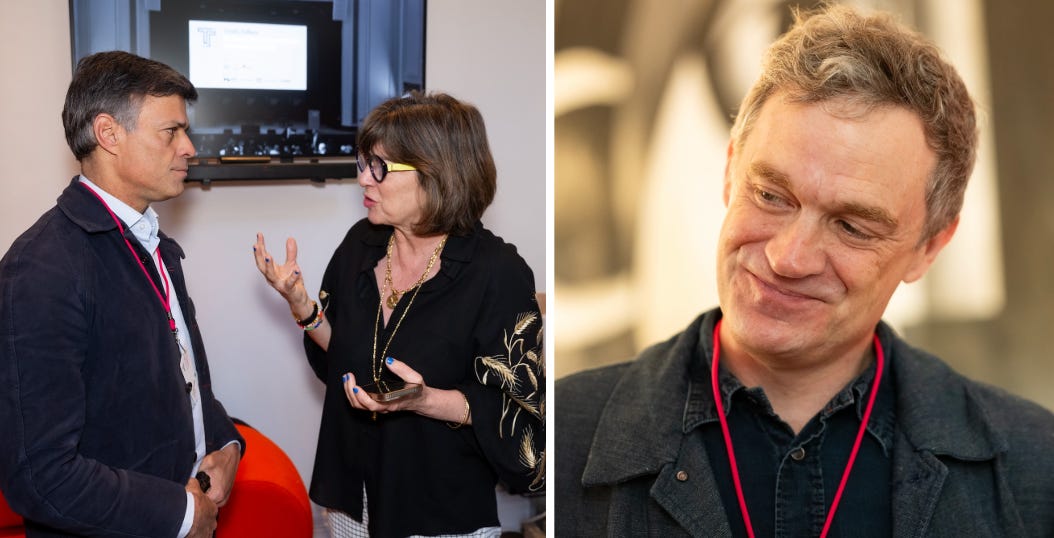
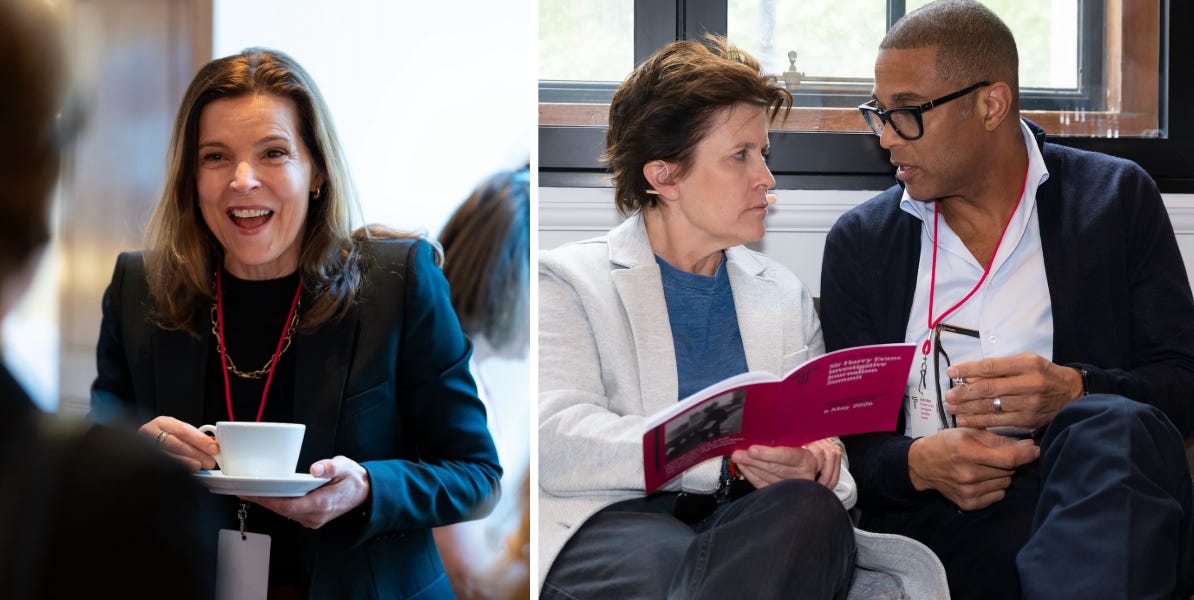
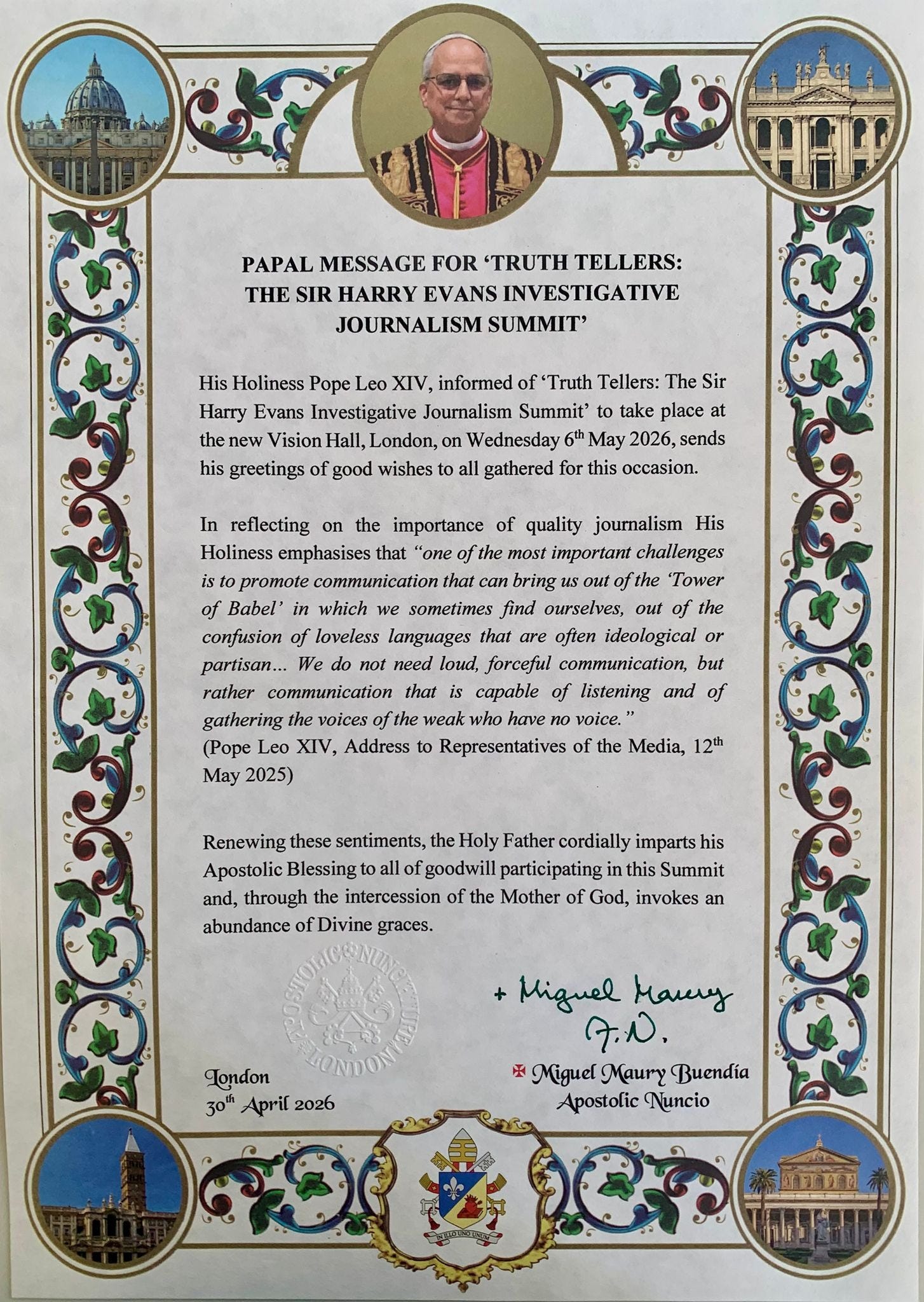
I’m still levitating from co-hosting the Truth Tellers Summit and not just because Pope Leo XIV, such a steadfast supporter of freedom of the press, sent a personal message of solidarity to our holy moly media gathering. His imparting of “an Apostolic Blessing to all of goodwill participating in this summit” must have been due to the celestial networking of my late husband, Sir Harry Evans, but my summit partners, Reuters and Durham University, and I were incredibly honored. You can watch all the stage programs and our fiery, fabulous speakers here.
A second miracle was that the BBC chose the day before the summit to announce a new six-part drama series called Dragon Slayers, about the Sunday Times Insight team’s most celebrated investigations when Harry was editor. The Emmy Award-winning heartthrob Matthew Rhys, star of The Americans and The Beast in Me, has been cast as Harry (fulfilling Harry’s life’s desire, btw, to be four inches taller). It set our hearts afire to have Matthew fly in from New York for the evening to read from Harry’s memoir, My Paper Chase, for the magical finale. I have absolutely no influence on who they will cast as 26-year-old me. At the time, the satirical weekly magazine Private Eye used to refer to me as a “buxom hackette” - a compliment that hasn’t aged well.
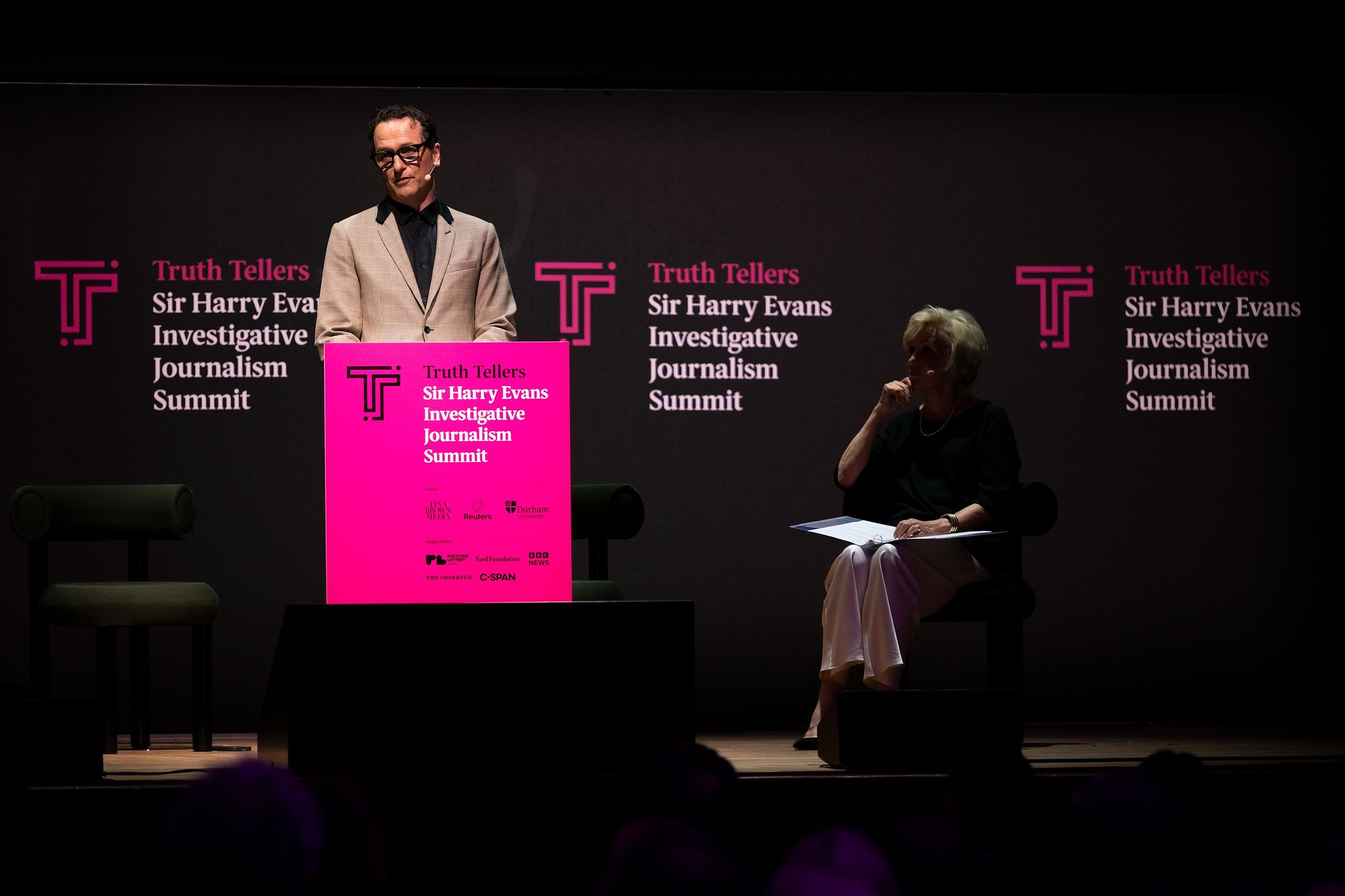
The summit rocked Vision Hall in London in front of an audience of 600 journalists, editors, media owners, podcasters, documentarians, and content creators. Our 50 stage guests were humbling in what so many had given up to honor their journalistic calling. Everyone in the theater left pumped, inspired, and recommitted to do battle for the truth. Everyone left a dragon slayer.
If you feel inspired to support the Truth Tellers mission of strengthening global investigative journalism, please consider making a donation to the Sir Harry Evans Journalism Fund (SHEF) by emailing shef@durham.ac.uk.
After joining us on stage, CNN chief international correspondent Clarissa Ward threw some laurels at Truth Tellers on IG as she tanked up on coffee at the airport on the way to her next assignment.
Some Electrifying Summit Highlights
The theme of the Truth Tellers day: how journalists can stay fearless. The Mayfair bookshop, Heywood Hill, created a Refuse to Be Scared book subscription list, based on recommendations from our stage guests. See the reading list and how you can subscribe below.
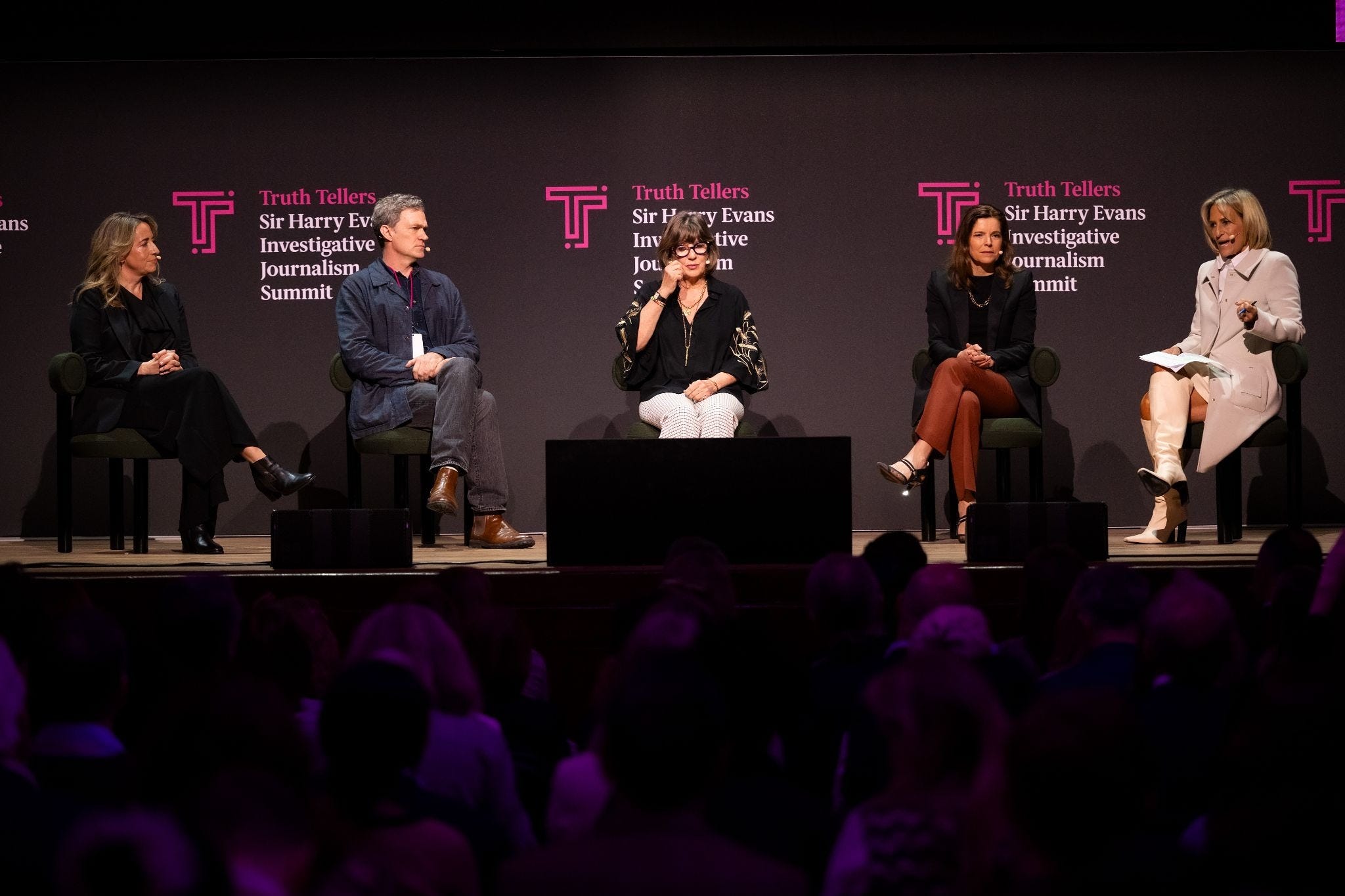
News Agents co-host Emily Maitlis moderated what she called a “ridiculously high-flying” opening panel.
Guardian Editor-in-Chief Katharine Viner, the longest-serving female editor in Fleet Street history: “We used to talk about fake news, but now reality itself feels fake. I think that has big challenges for news.”
Journalist and author of the new non-fiction bestseller, London Falling, Patrick Radden Keefe: “The truth is a process. It’s a way of doing your job and showing your work.”
CNN Chief International Anchor Christiane Amanpour: “I’m concerned based on what’s happened to the other things that have been taken over... Do I have to list what’s happening [at CBS News since it was bought by David Ellison’s Paramount] there? Hemorrhaging viewers, probably hemorrhaging money. This ideological realignment of CBS and the destruction, potentially of 60 Minutes. I would like to think that we would have the very basic, which is editorial independence. I’m hoping for that.”
Wall Street Journal Editor-in-Chief Emma Tucker: “The Trump story [about his alleged birthday letter to Epstein] epitomised how difficult and expensive these stories are. But at least the defamation came after we’d published. These days, increasingly, we’re getting legally challenged before we even get to publication.”
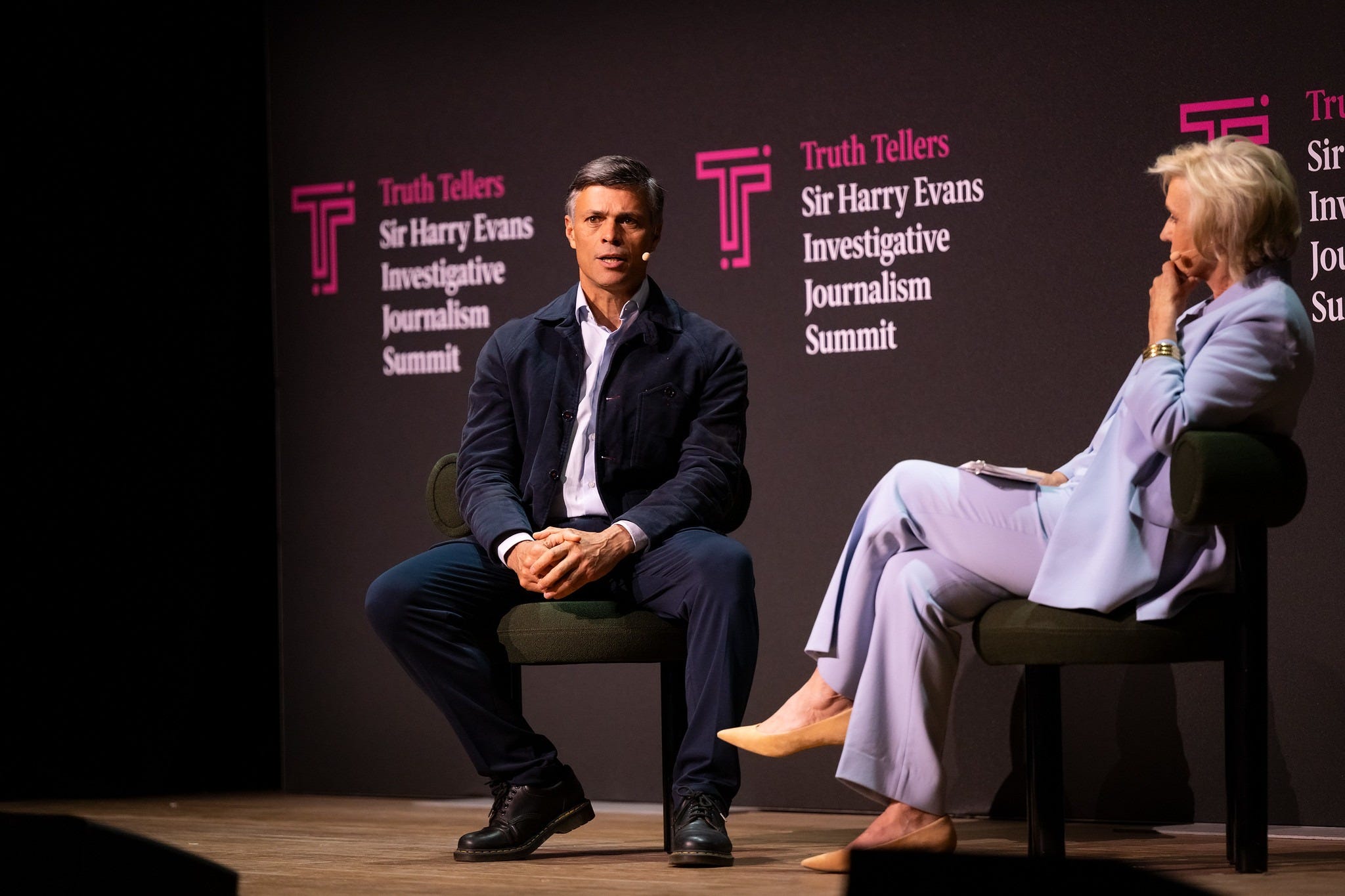
Leopoldo Lopez, a Venezuelan opposition leader who spent seven years in prison and house arrest under the Maduro regime, talked to me about how he escaped Venezuela, disguised in an electrician’s uniform and a Covid face mask. Maduro thugs have since torn down his house and killed his dogs.
Leopoldo Lopez: “I invite all of you to meet Venezuelans. Every Venezuelan has a similar story about freedom, democracy, and human rights violations. I encourage all of you to go and speak to Venezuelans and ask them about their own story.”
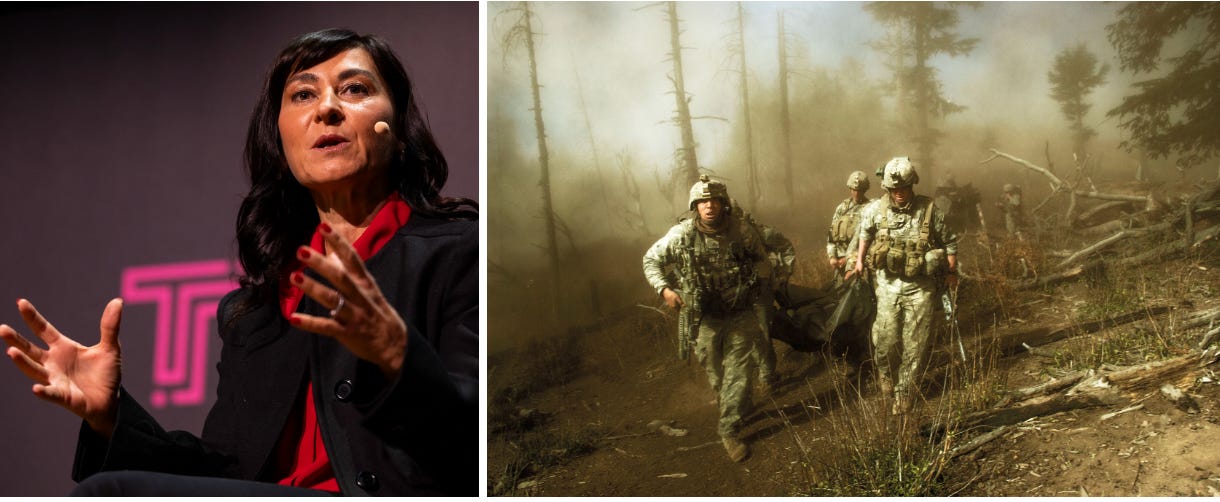
Photojournalist Lynsey Addario explained why she runs toward fire in Afghanistan, Sudan, Ukraine, and other conflict zones again and again to take her mesmerizing photographs.
Lynsey Addario: “I’ve seen people change their minds because of good journalism… If I can do anything to move the dial a little bit in this world, I will. I can’t not do it.”
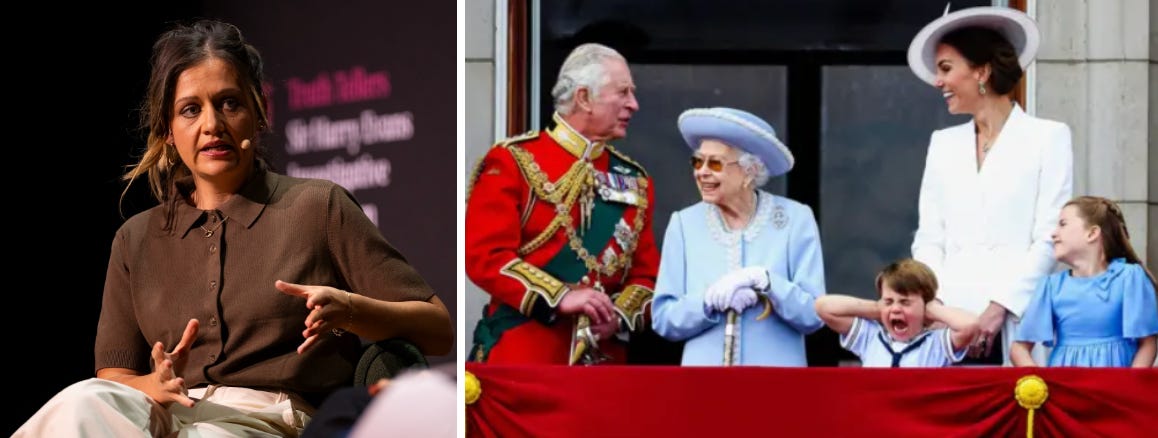
Reuters photojournalist Hannah McKay on capturing an image that went around the world
Hannah McKay: “I was hitting and hoping with this.. I made sure that I stuck a really long lens on the balcony because when kids are involved, Prince Harry did the same when he was a kid. Everybody knew this reputation of Prince Louis. He might do a bit of comedy.”
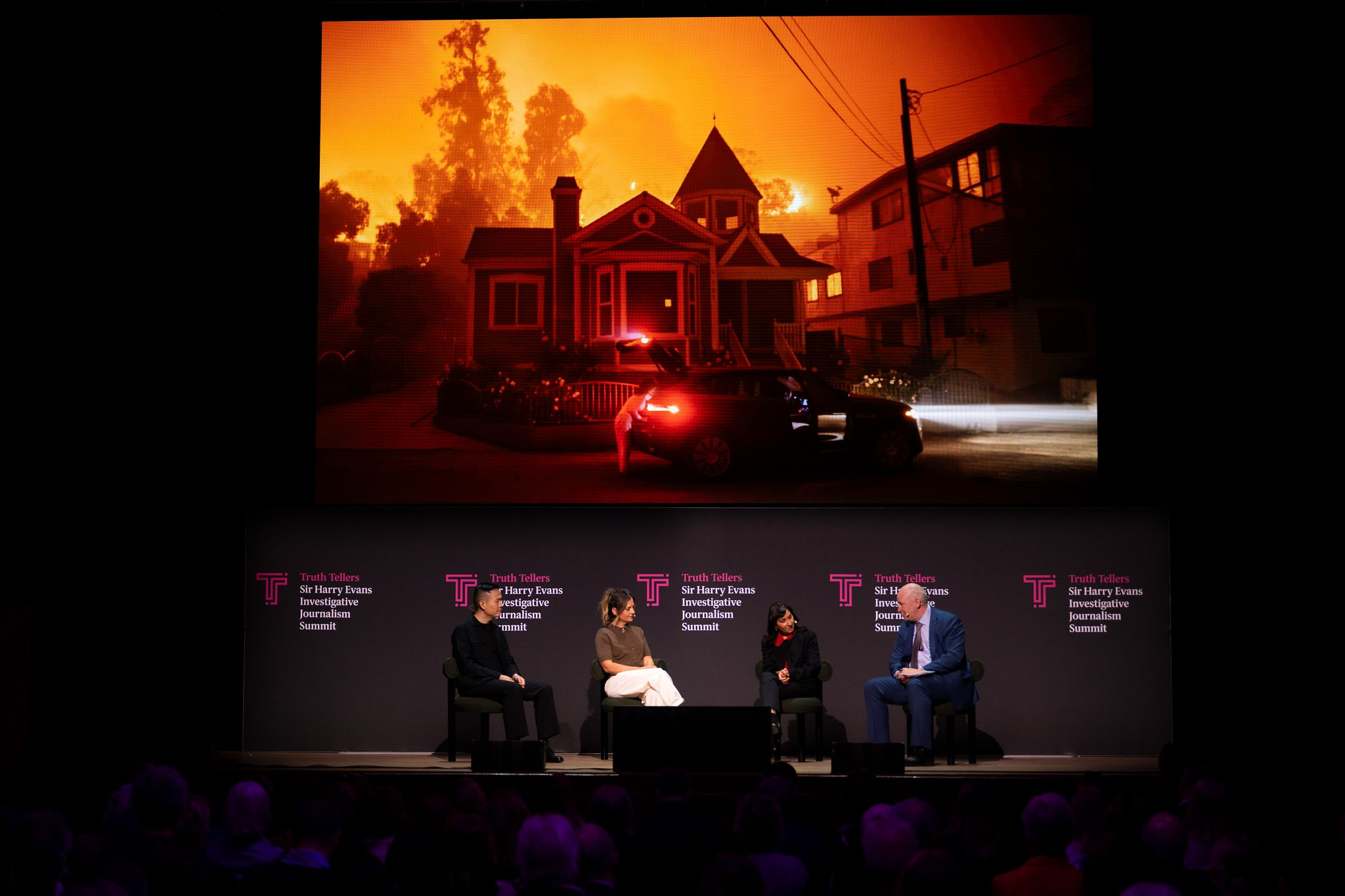
Photojournalist Marcus Yam on stage with McKay, Addario, and Globe and Mail editor-in-chief David Walmsley. Above them: Yam’s photo of the 2025 California wildfires. He snapped a woman leaving her home as the fires closed in on the already evacuated city of Ventura.
Marcus Yam: “I was self-publishing on Twitter and a reader actually wrote back and said that was his mother and he’s glad to see her actually change her mind and leave.”
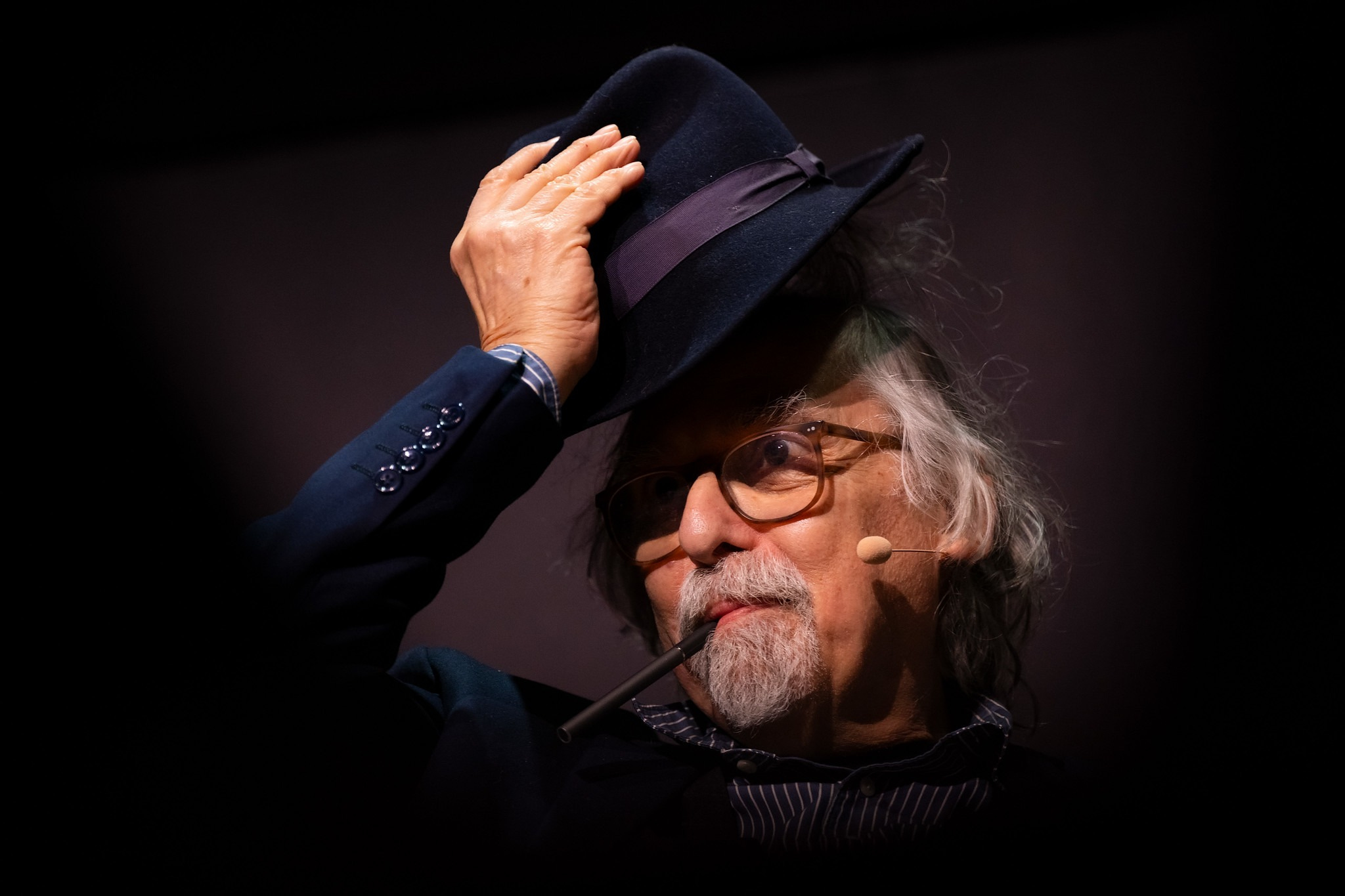
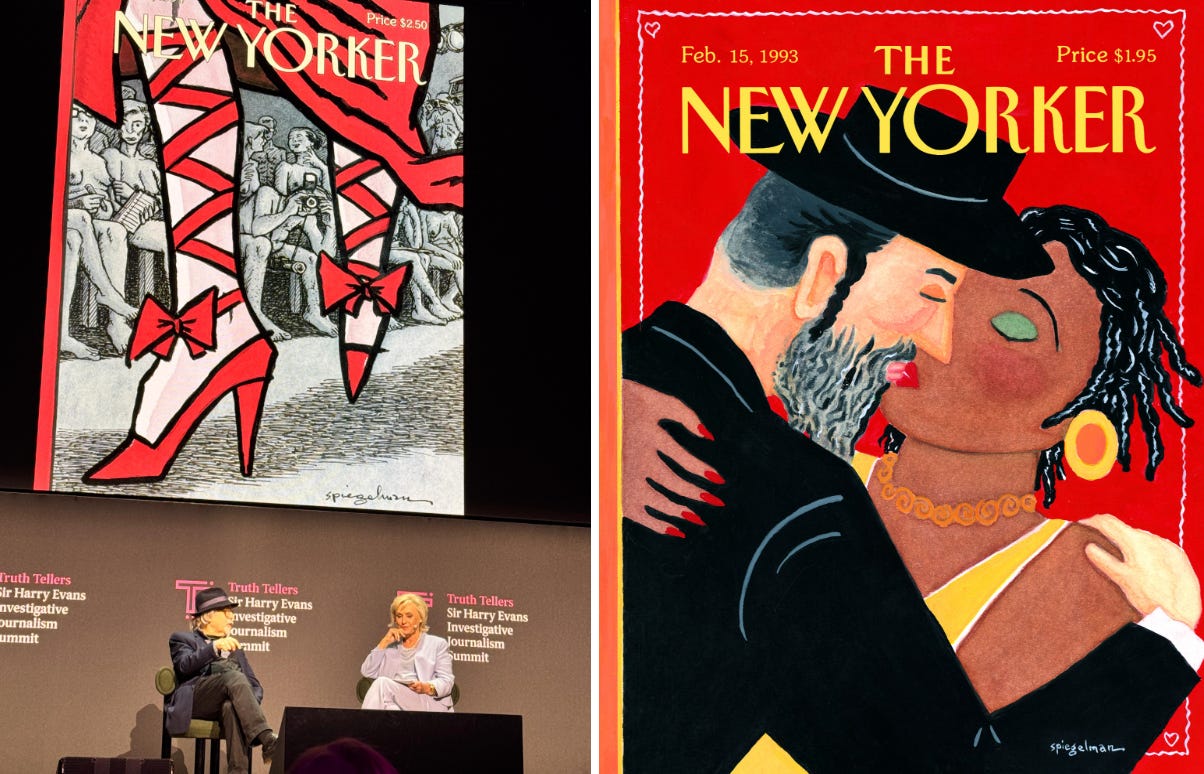
Comix artist and Pulitzer Prize-winning Maus icon Art Spiegelman and I reminisce about when he joined me at the New Yorker in 1992 to banish quiet covers of white picket fences. I failed to stop him from vaping on the Truth Tellers stage.
“The reason that these [magazine covers] work so well is an image with an idea in it is exactly what you have in your brain before you turn it into words or pretty pictures. It’s how ideas fuse together with something visual and something conceptual. That’s been a guiding light for how covers should work when they’re not barn doors.”
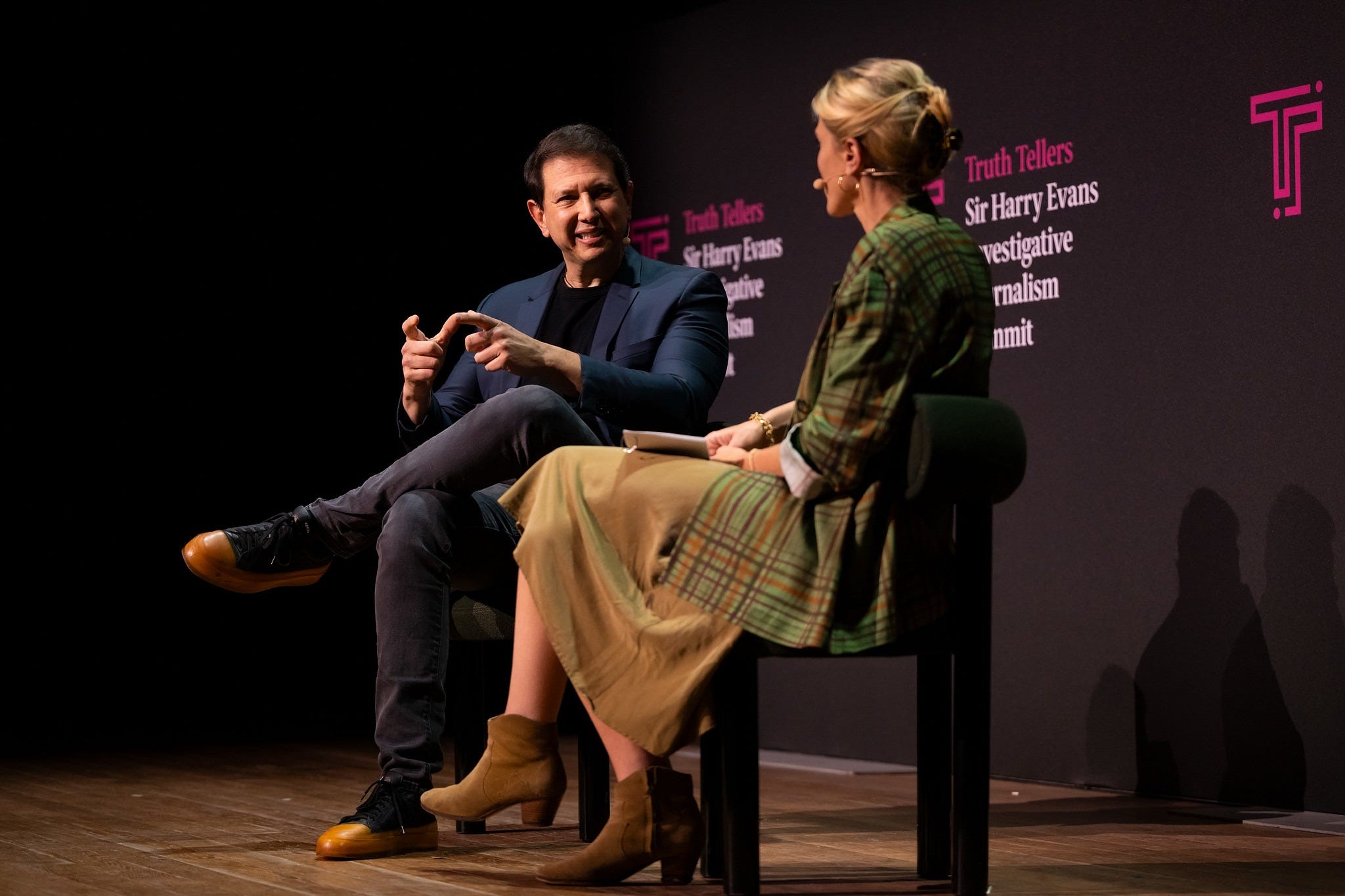
CNN’s Clarissa Ward talks Iran war and Israeli intelligence with Ronen Bergman, the formidable NYT Tel Aviv-based senior national security correspondent, who has been called “the foremost expert on the Mossad.”
Bergman: “Benjamin Netanyahu and his followers created the most powerful propaganda machine, I believe, on the face of the earth. And it’s reshaping or rebranding history.”
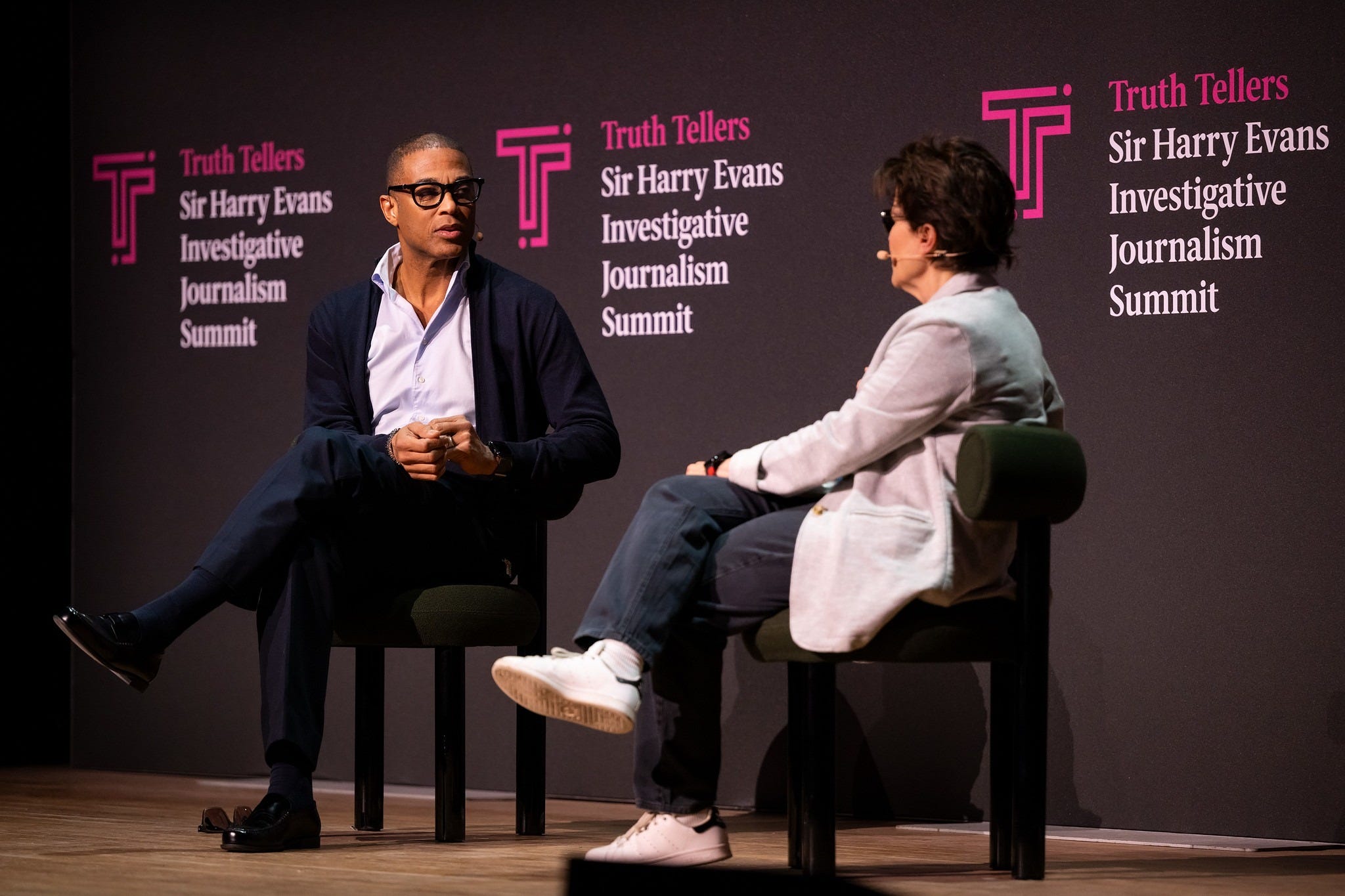
Emmy Award-winning journalist Don Lemon was asked by podcast queen Kara Swisher if he would ever run for political office.
Don Lemon: “Why not?… I’ve worked hard. People laugh, but I’m a completely self-made person. I didn’t come from wealth. I did not have $400 million to start. I’ve made it to the top of my profession. I’ve also started a business, and I’m a self-made millionaire from a country where my ancestors were enslaved, so I think that’s a pretty big accomplishment.”
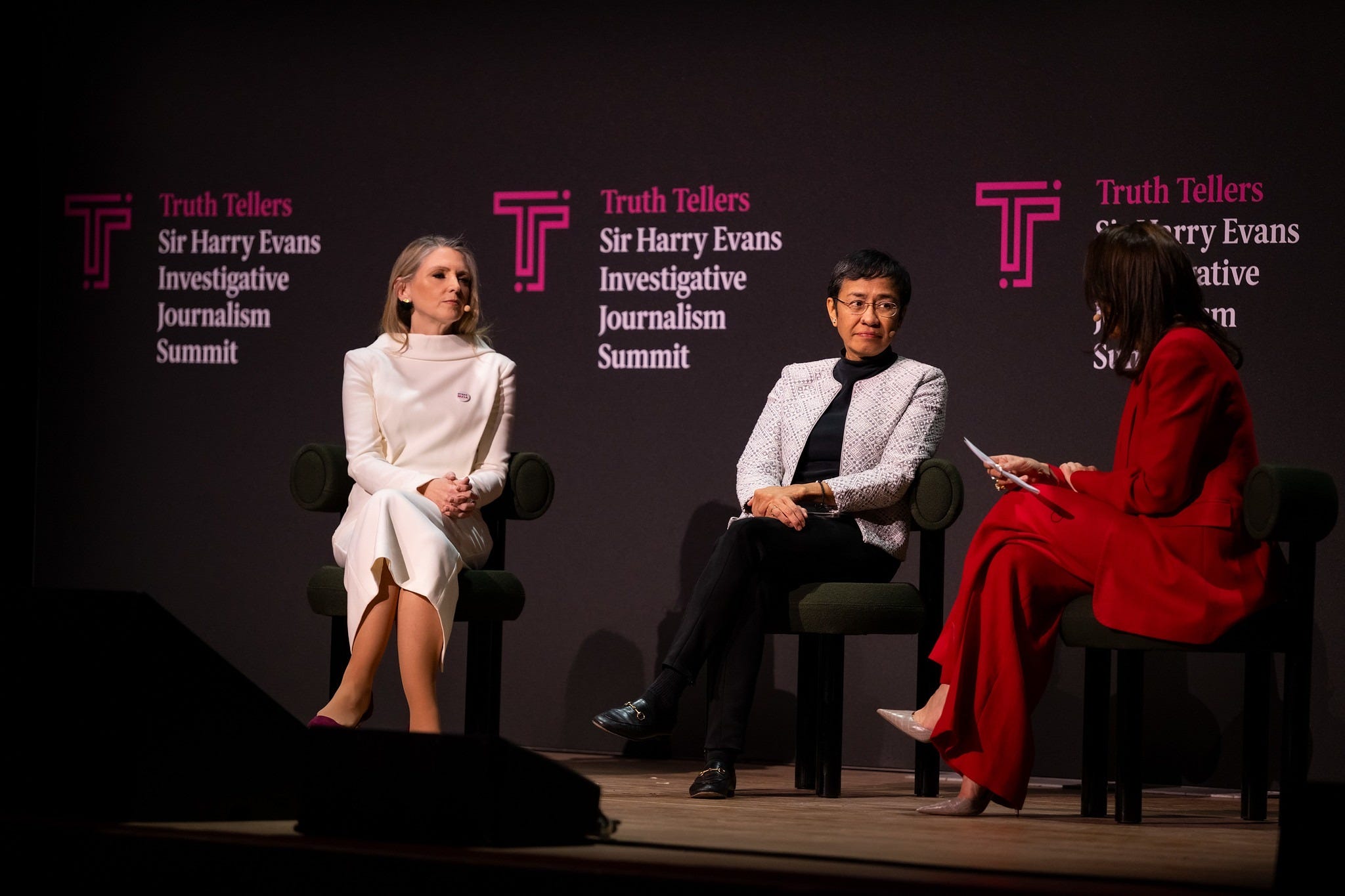
Nobel laureate Maria Ressa and human rights lawyer Caoilfhionn Gallagher interviewed by Alessandra Galloni, who hauled in two Pulitzer Prizes this week for Reuters as its editor-in-chief.
Maria Ressa: “The battle is now. So if you’re a journalist today, man, this is the time to jump in.”
Caoilfhionn Gallagher KC has secured the freedom of over 85 wrongly imprisoned journalists, bloggers, cartoonists, and activists. On April 24, she won the release of Kuwaiti-American journalist Ahmed Shihab-Eldin, who was detained in Kuwait for 52 days after posting about the Iran war. “You’ve got to be a relentless optimist to do this job. I’m a big believer in that old phrase: they tried to bury us; they didn’t realize we were seeds.”
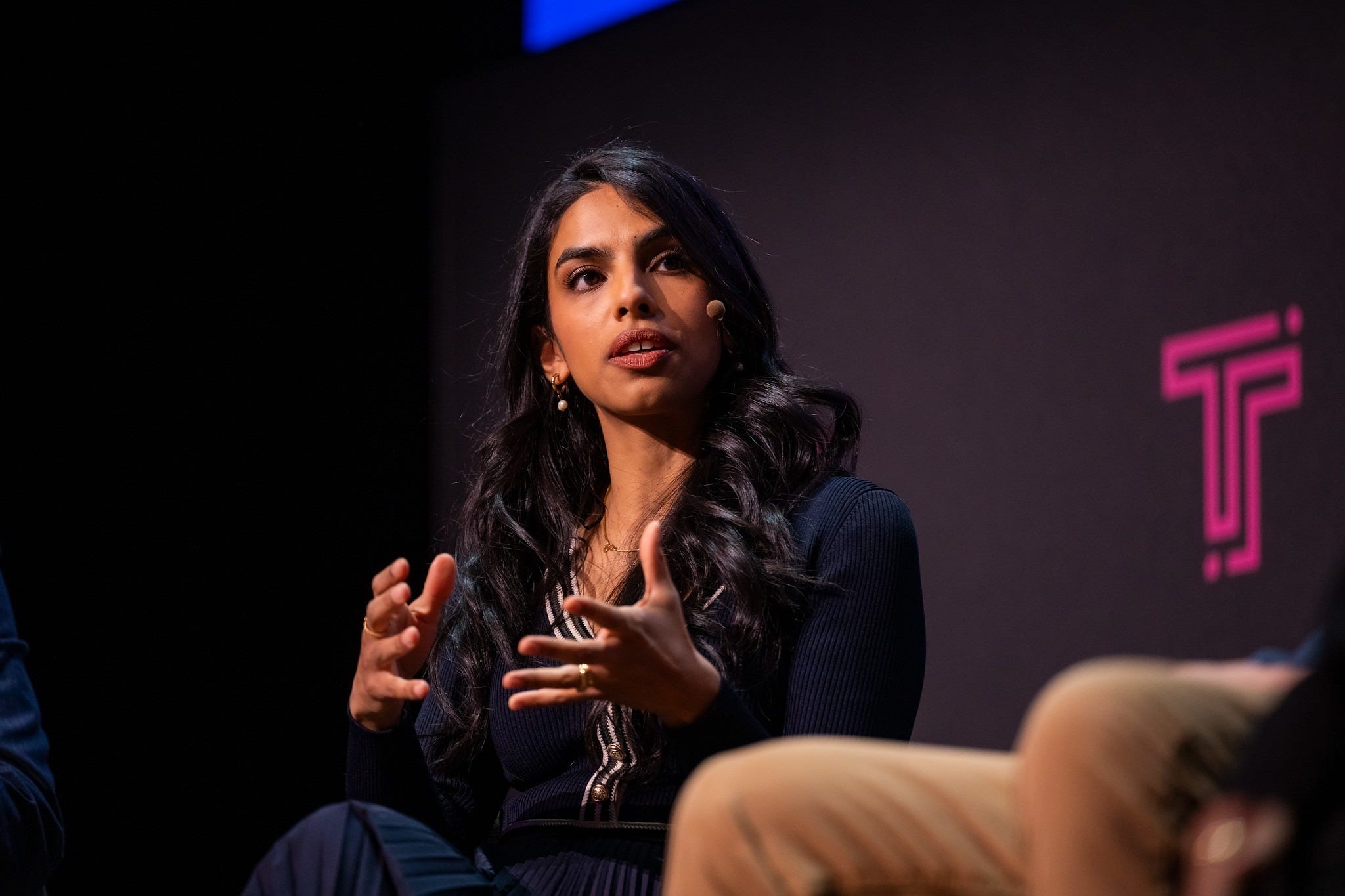
BBC Verify’s Merlyn Thomas brings her digital sleuthing talents to separate fact from fiction in stories from the Iran war to the civil war in Sudan.
Merlyn Thomas: “The most reliable tool that we still have is our eyes.”
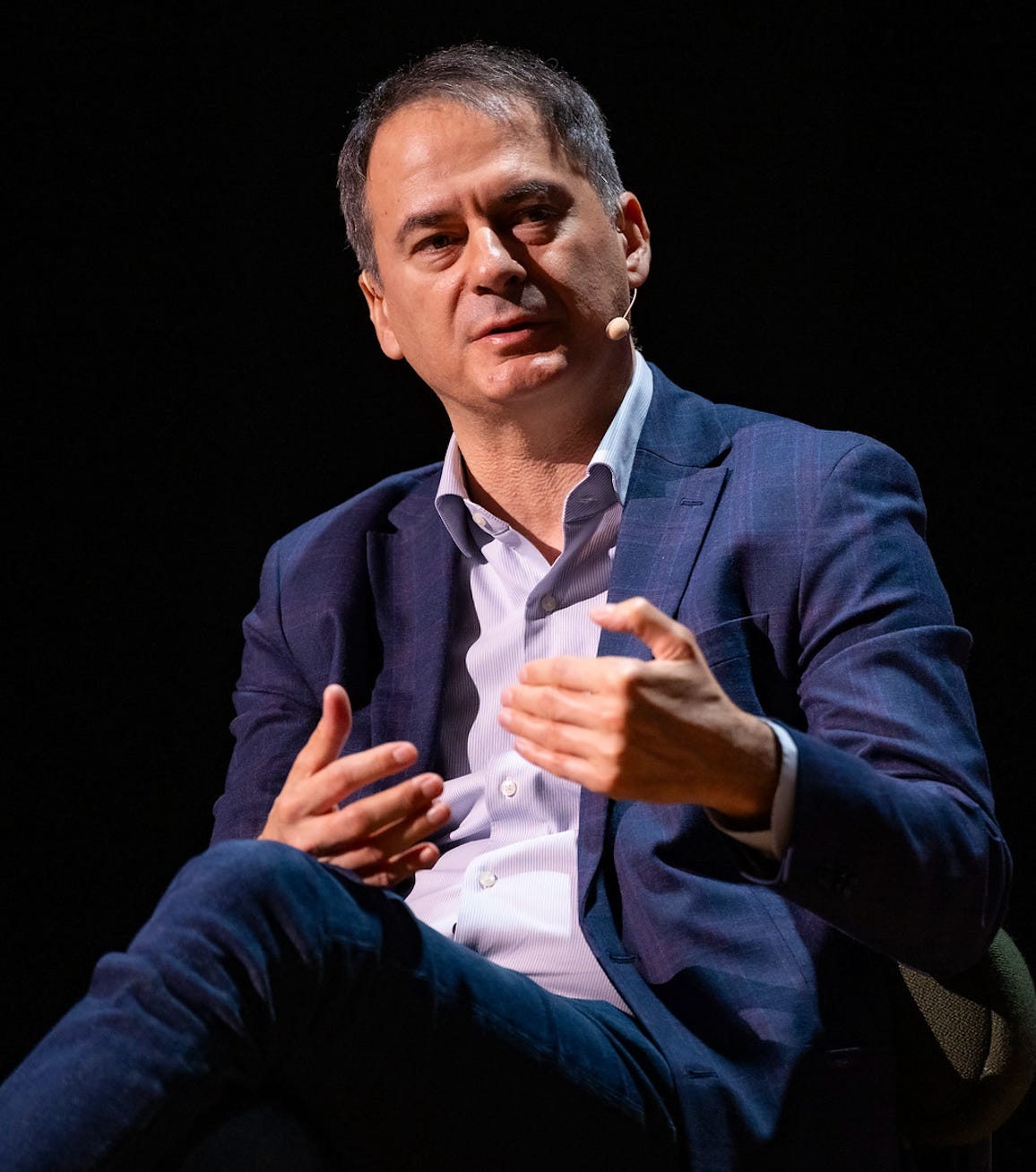
Christo Grozev, the rock star investigative journalist who has exposed thousands of Russian spies and who also proved that it was Russian agents who poisoned the late opposition leader Alexei Navalny in Russia in 2020.
Christo Grozev: “Finding spies is not a problem…Figuring out what they’re up to is the problem.”
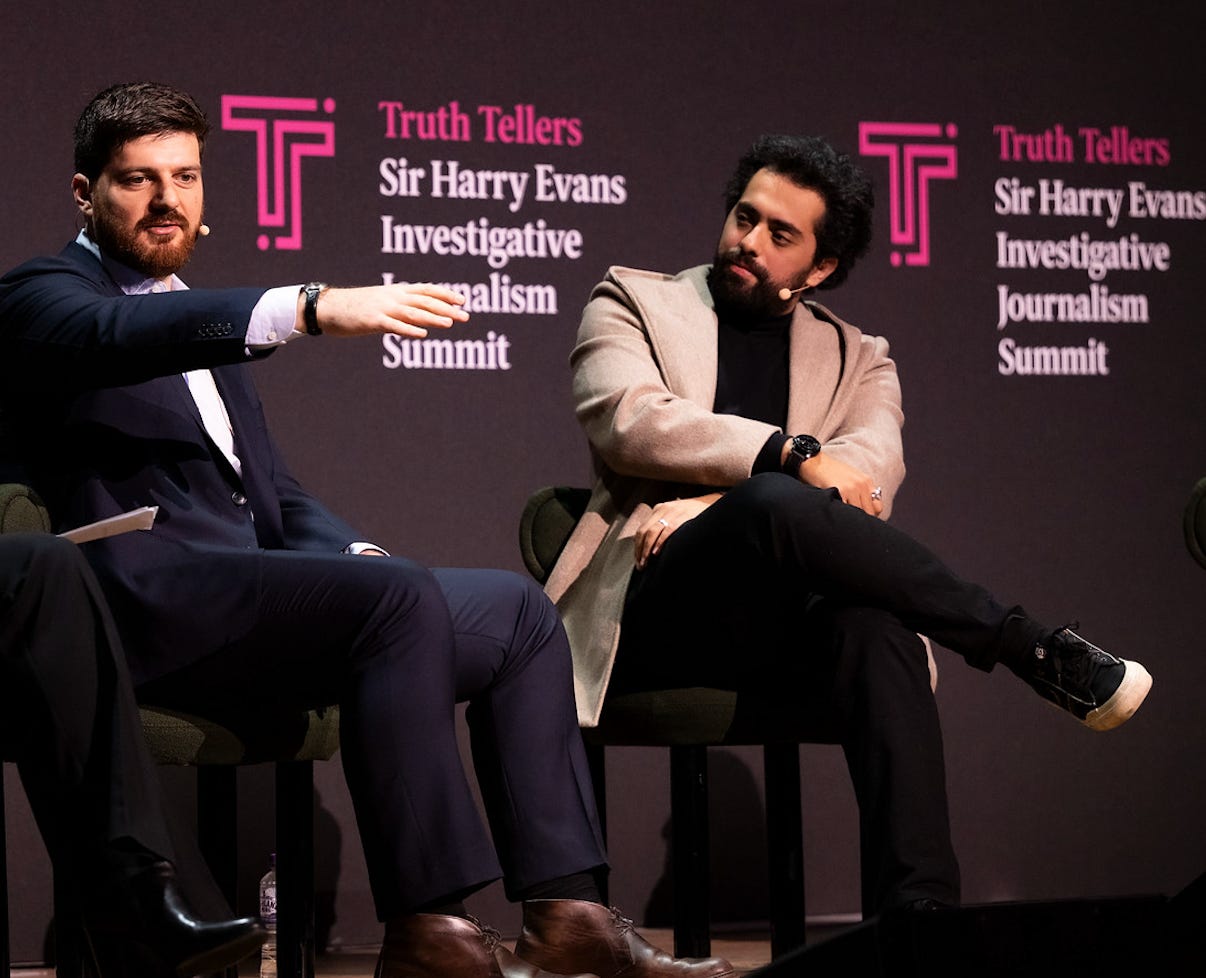
Timour Azhari (left), who has covered the Middle East for a decade for Reuters, managed to get into Syria, along with Reuters colleague Feras Delatay (right), just days after the fall of Bashar al-Assad in 2024.
Timour Azhari: “You could basically walk in anywhere. It was this sweet spot where the old regime was melting away, and the new guys were just coming in. I mean, we got to Damascus before the new president.”
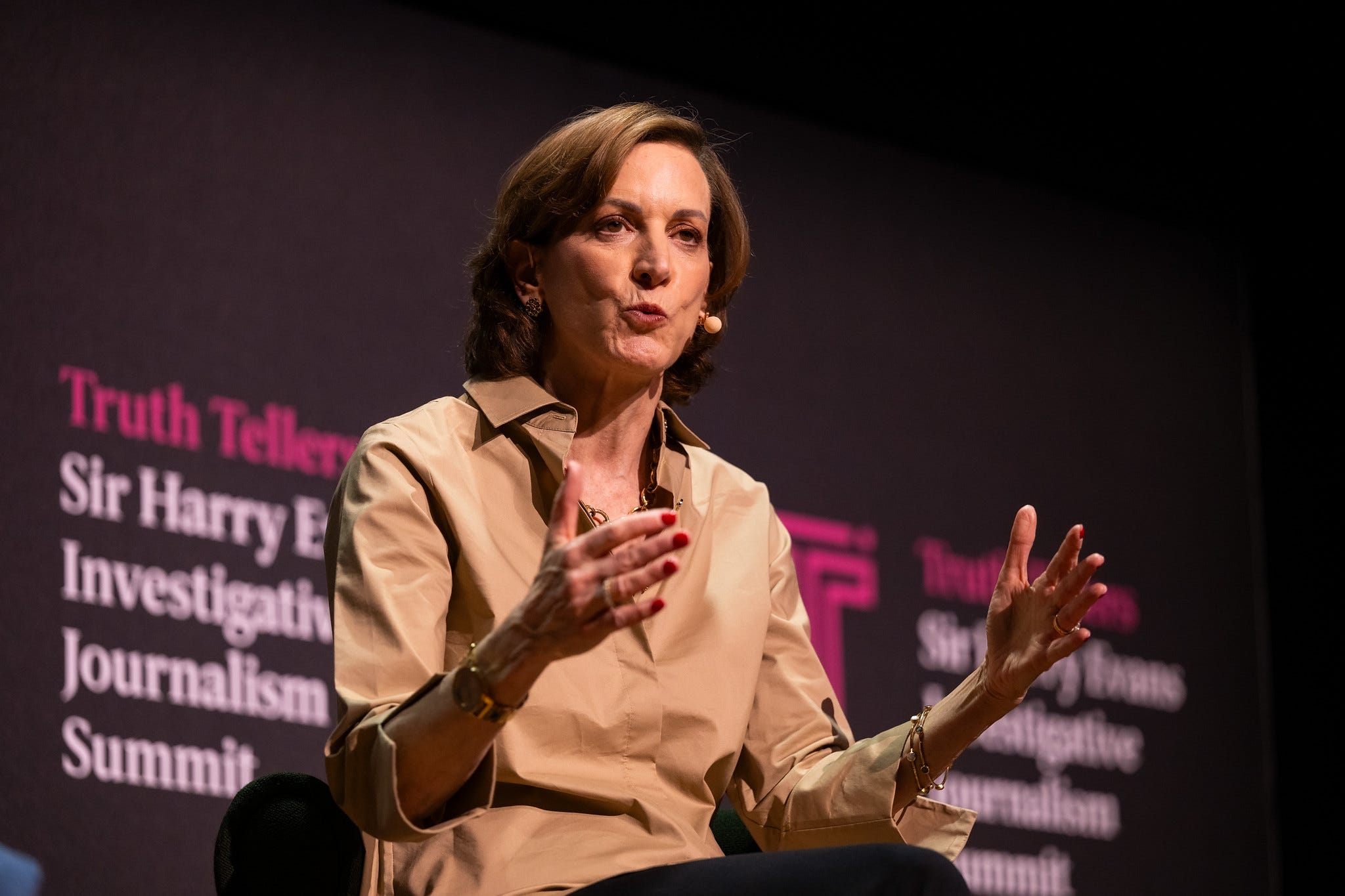
Pulitzer Prize-winning historian, journalist, and author of Autocracy Inc., Anne Applebaum, brought her cerebral star power to a discussion with Russian journalist Anna Nemzer and Hungarian hero editor András Pethő about autocrats vs. the press.
Anne Applebaum: “What really helps is to amplify the people who are doing the work on the ground. So the Hungarians, the Russians – link to them, post them, talk about them, refer to them, and make sure that people hear what they’re saying.”
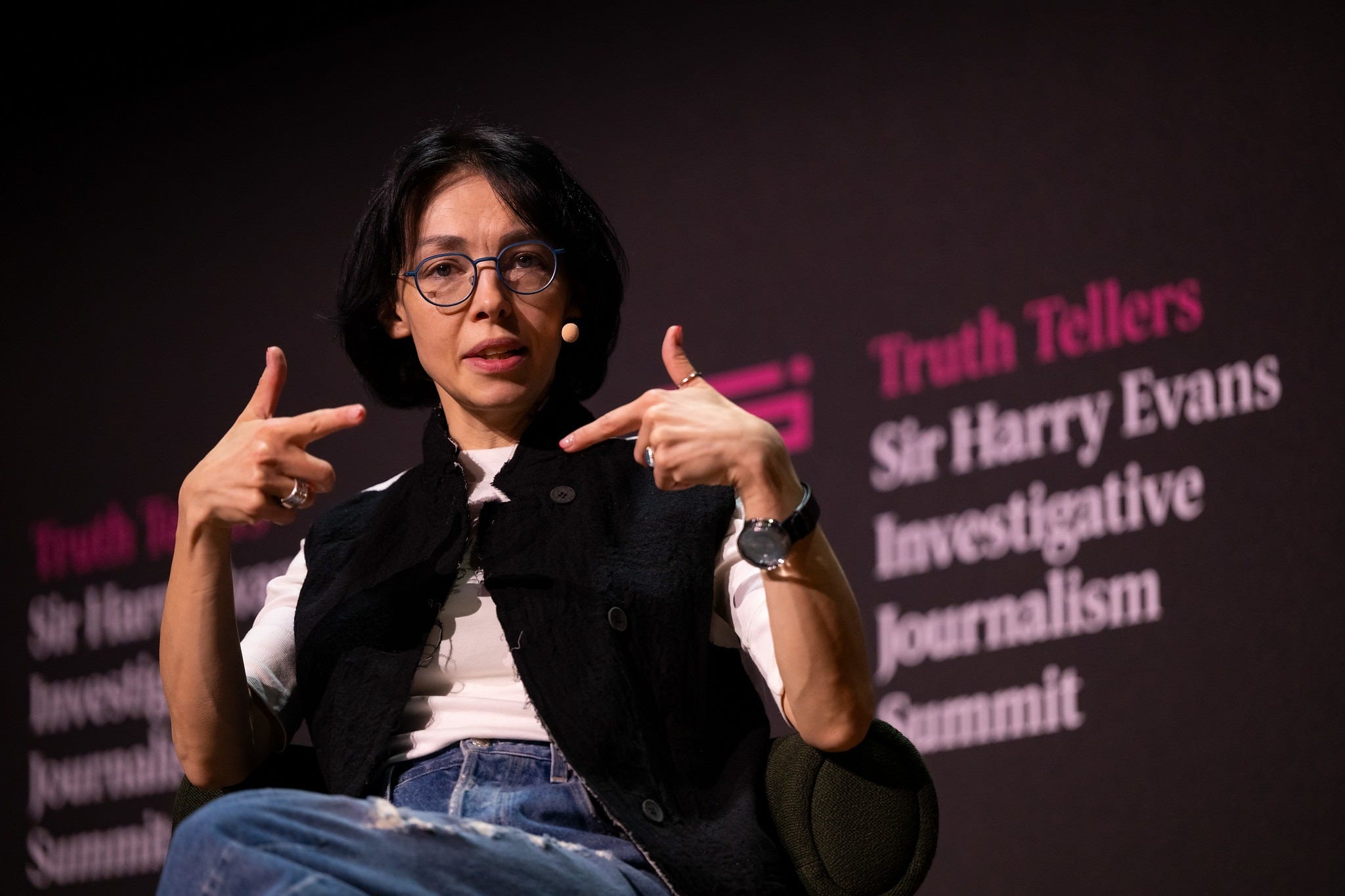
Anna Nemzer, a one-time presenter with TVRain, Russia’s last independent TV channel, before it was closed in Moscow in 2022. Declared a foreign agent by the Kremlin, Nemzer now lives in exile. TVRain now broadcasts from the Netherlands.
Anna Nemzer: “We are definitely losing access to our audience, but it doesn’t mean that my colleagues are not effective. They are very effective. They are the last institutional hope for my miserable country.”
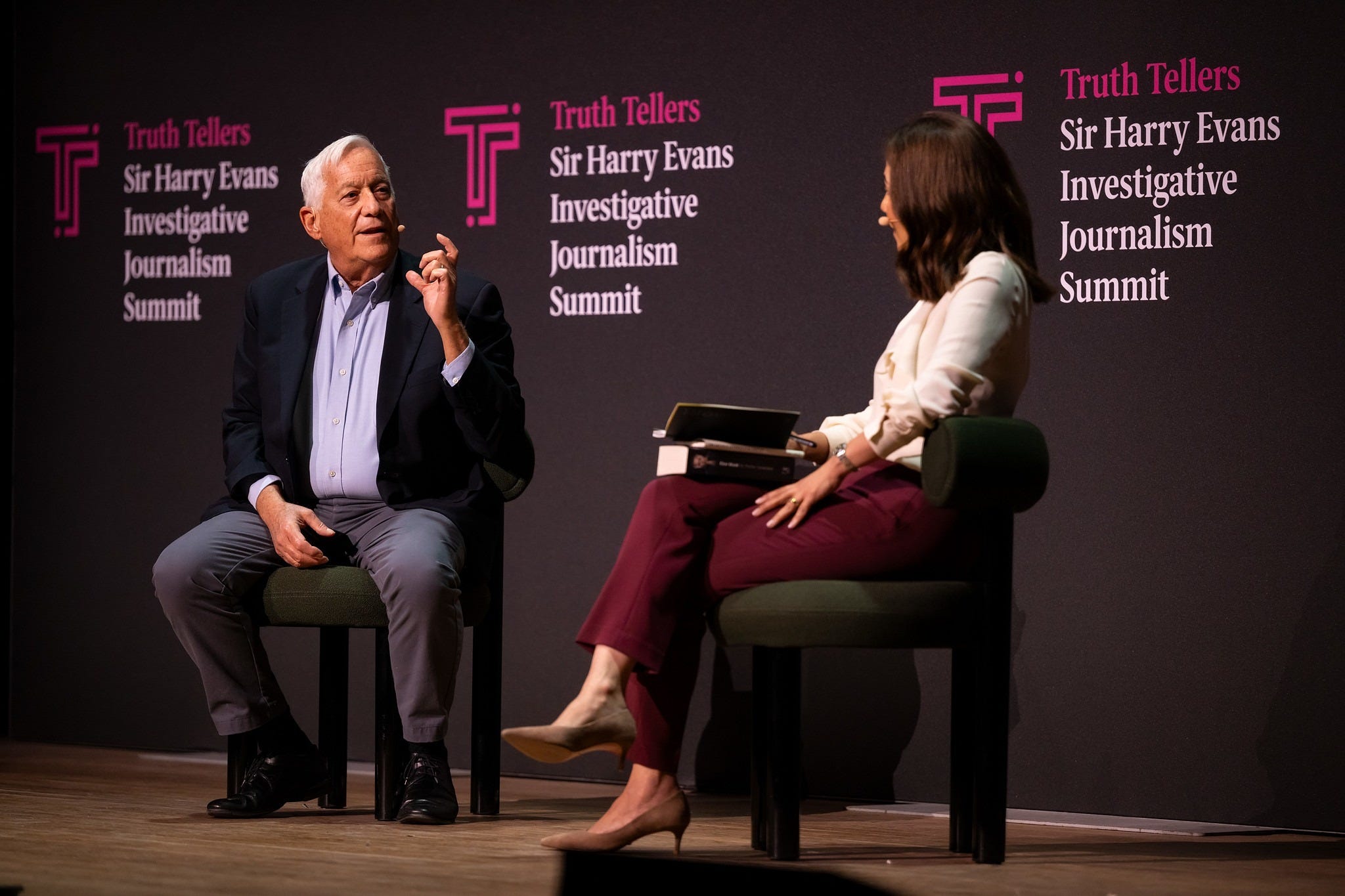
The news broke that CNN founder Ted Turner had died, just before media titan Walter Isaacson took the stage with Bloomberg Weekend’s Mishal Husain. Isaacson, who was chairman for CNN from 2001 to 2003, shared his memory of being with Turner on 9/11.
Walter Isaacson: “I can remember in 2001, when the Twin Towers got hit, Ted had been kind of banished upstairs at CNN Center because the corporate overlords at Time Warner (CNN’S owners) didn’t want him meddling with it. But when we were watching the towers go down in that newsroom, I said to our news editor, ‘Excuse me a second, I’m going to have to go upstairs.’ And there was Ted alone in his office, and I said, ‘Ted, you’ve got to come back.’ He said, ‘Well, I’m not.’ I said, ‘No, I’m asking you, come to the newsroom. This is why you created this network.’ So he brought a Confederate sword that he had hanging on his wall and he rallied us. He said, ‘Journalism is made for times like this.’”
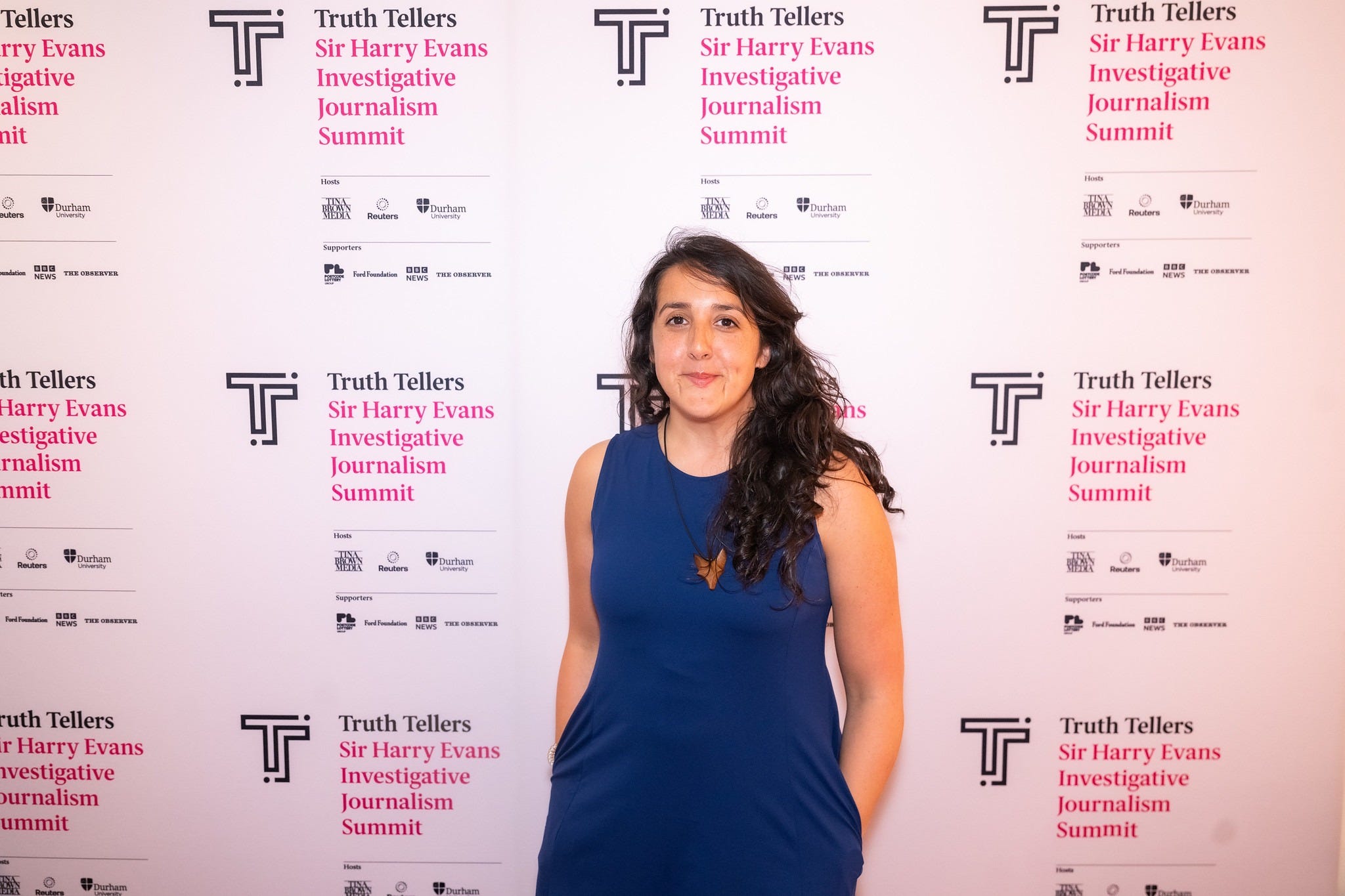
One of my favorite stage moments: announcing Iranian-Canadian photographer Kiana Hayeri as the inaugural Sir Harry Evans Global Fellow in Photojournalism. Thanks to the generosity of Thomson Reuters chairman David Thomson and his family, it’s one of the most richly endowed awards in photojournalism and also offers the rarest of prizes, the gift of time: a year working with Reuters and Canada’s Globe and Mail.
Kiana Hayeri: “At a time when truth is contested, and attention is fleeting, my work is not only about witnessing, but about staying. Staying with the story even after the headlines move on.”
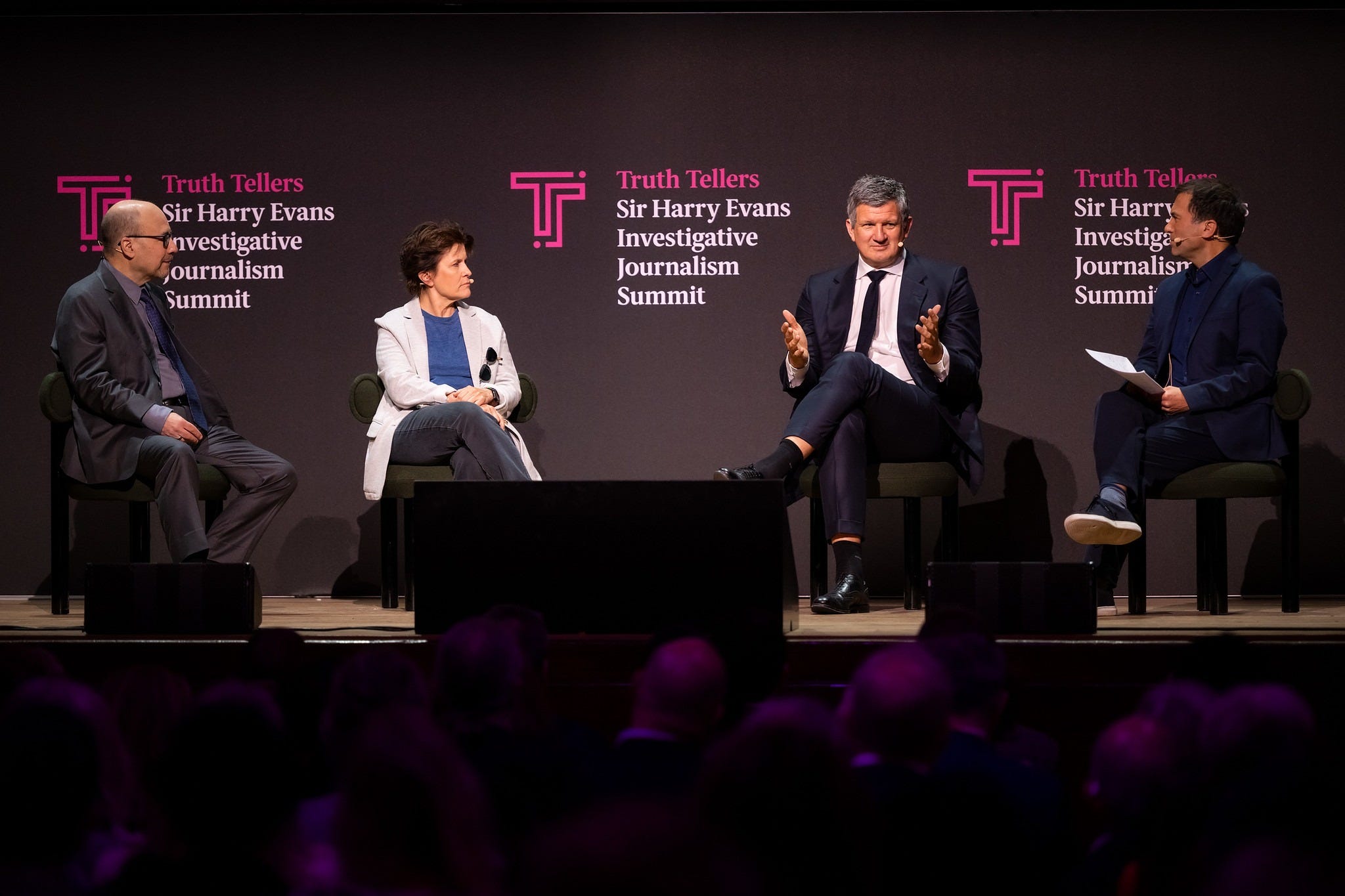
The Great Scrape: BBC’s Ros Atkins interviewed Thomson Reuters President and CEO Steve Hasker, journalist Kara Swisher, and Craigslist founder Craig Newmark about the media in the age of tech dominance.
Steve Hasker: “The tech industry has done a wonderful job of flattening everything to the point where a cat video and a thoroughly investigated, fact-based, independent piece of journalism are on a level playing field. I think that’s the great travesty.”
Kara Swisher: “What’s happened with the media is we pretend the tech industry is smarter than they are about everything, and they just don’t care, or they’re obtuse.”
Craig Newmark: “Some (tech firms) are benevolent and do want to help out. Some just don’t care. So what I try to do is find a means of encouraging the people who want to do something to do the right thing.”
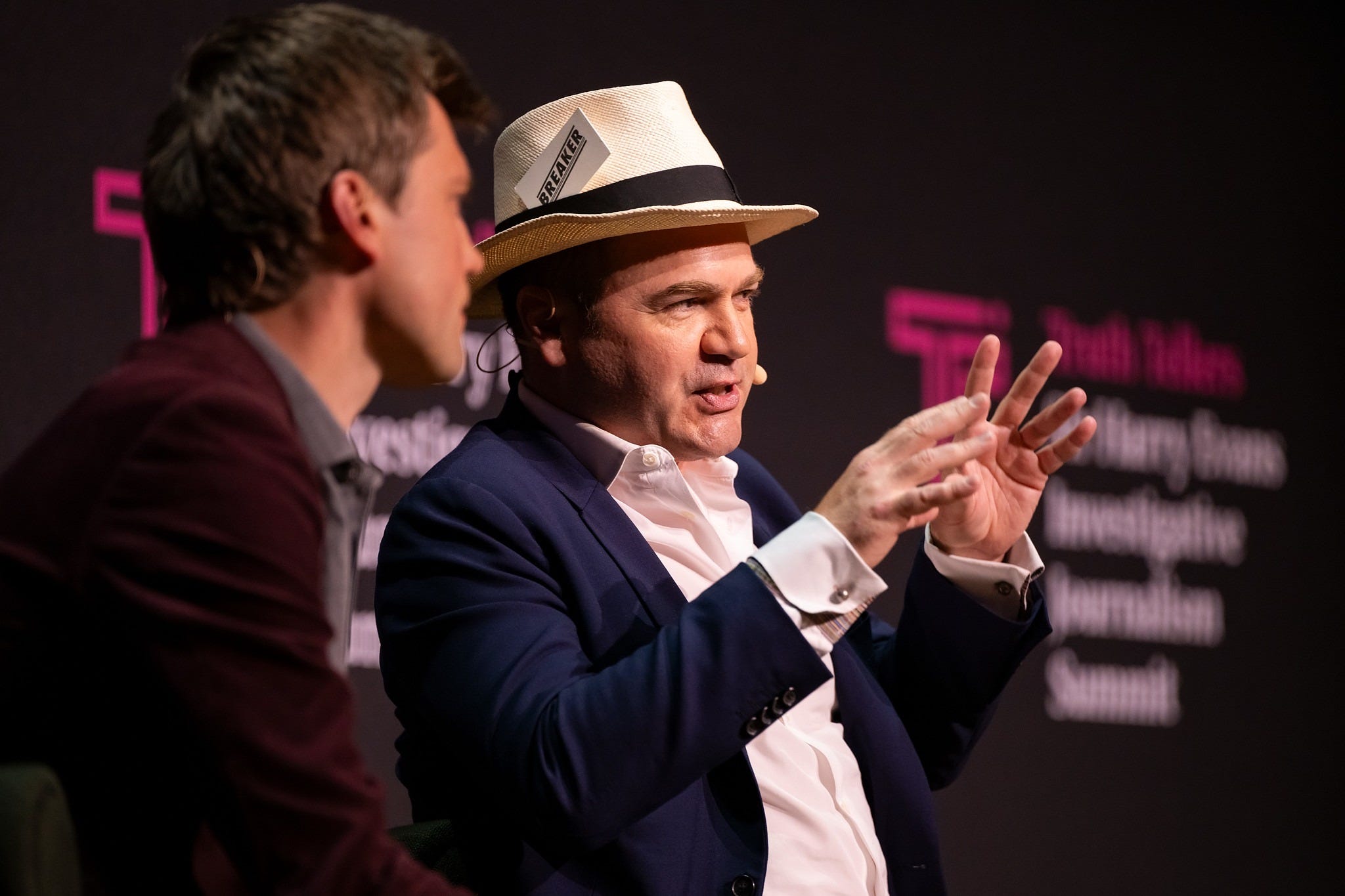
Lachlan Cartwright (right) threw his hat into the independent journalism world when he founded Breaker Media in 2025. The media buccaneer talked about journalism on a credit card with London Centric founder Jim Waterson (left) and moderator Katie Razzall of the BBC.
Lachlan Cartwright: “There was a period when it just wasn’t growing. I thought I’m absolutely cooked here. But thankfully, due to a few different things that we did, including scoops, including relaunching it with a number of big-name guests… we got to the first anniversary in February. And we’re profitable.”
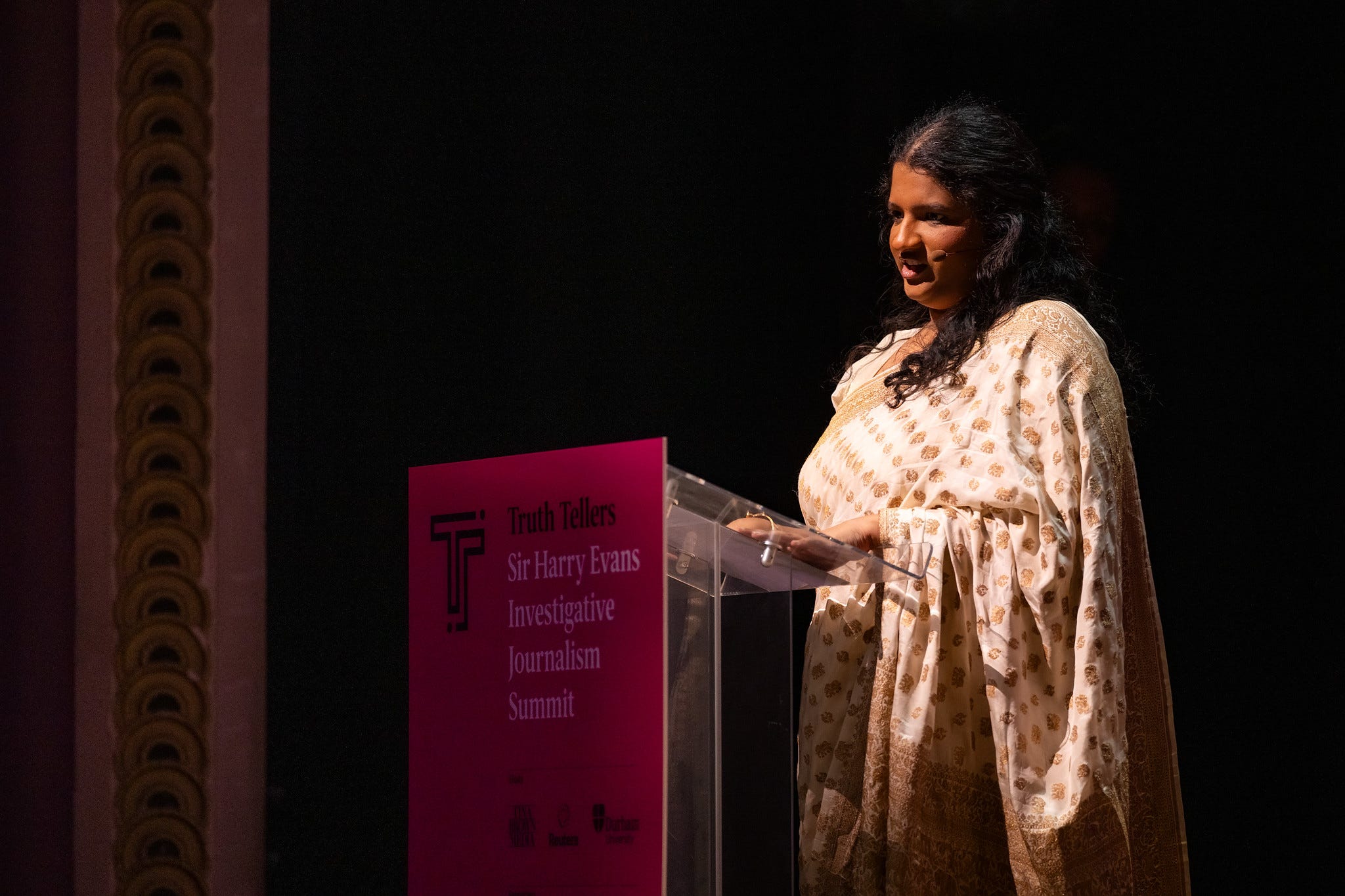
The Sir Harry Evans 2026 Global Fellow in Investigative Journalism Nandhini Srinivasan is embedded with Reuters’ data and computational journalism team in Delhi. She beat out over 800 applicants to be the 4th Sir Harry Fellow.
Nandhini Srinivasan: “I get to do what I love, learn from the best, and tell the stories of people who are usually ignored. I am now working alongside the very people who inspired me to become a journalist.”
The Bootstrappers
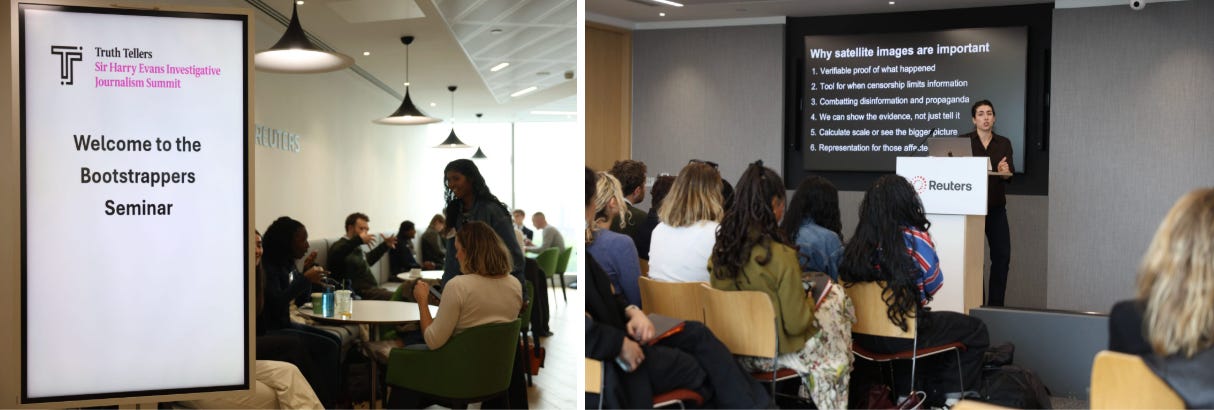
Truth Tellers again hosted 60 young journalists who are bootstrapping themselves into the industry. They soaked up the stage content, networked at a summit luncheon, and the following morning, learned reporters’ tricks of the trade at a hands-on mentoring session at Reuters HQ in London.
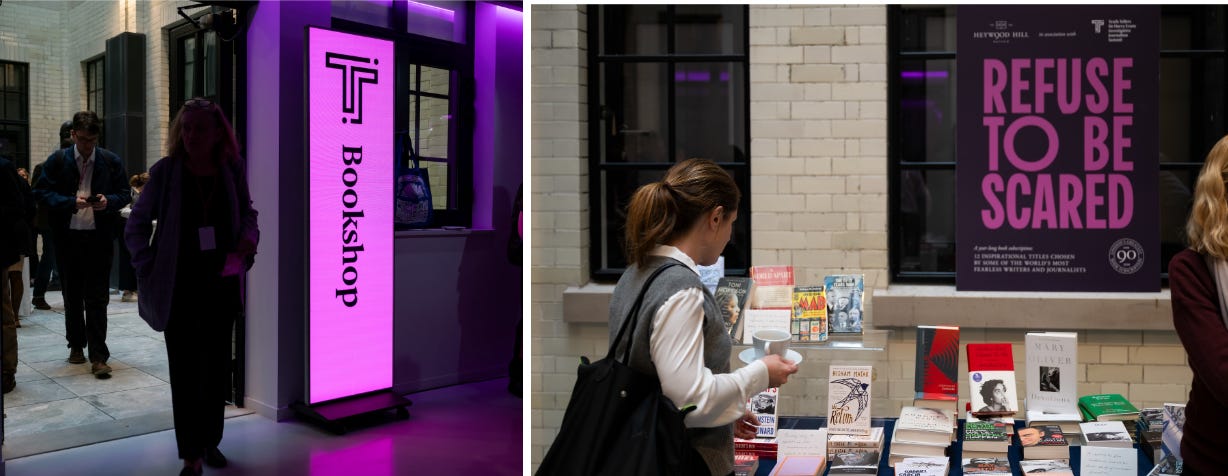
A ‘REFUSE TO BE SCARED’ READING LIST
Truth Tellers speakers answered the question: Which book has inspired you and why? You can sign up here for a book subscription series based on their responses.
Christiane Amanpour, Recipes & Memories by Sophia Loren- “Peeks out from my kitchen bookshelf and allows me to bask in an altogether better time & place!”
Anne Applebaum, A World Apart by Gustav Herling-“A striking memoir by a Polish novelist who …preserved his humanity and his morality, even in the face of inhumane and immoral repression.”
Timour Azhari, On the Road by Jack Kerouac-“Showed me that an interesting life might come from being in strange places with unknown faces and yet still connecting on some human level.”
Tina Brown, Scoop by Evelyn Waugh-“It captures the fun, exuberance, and all the chaotic comity of newspaper journalism.”
Lachlan Cartwright, Say Nothing by Patrick Radden Keefe-“A playbook for fearless journalism.”
Feras Delatey, A Song of Ice and Fire by George R. R. Martin-“Refuses to divide people into heroes and villains, showing instead that morality is shaped by fear, trauma, and circumstance.”
Jeanie Finlay, The Year of Magical Thinking by Joan Didion-“Writes with forensic clarity, exposing private truths and cutting cleanly through the polite fictions we build around loss.”
Michael Gove, Hitch-22 by Christopher Hitchens-“A brilliant writer, fearless truth teller and enduring example…beautifully written”
Christo Grozev Catch-22 by Joseph Heller-“It opened my eyes to the fallibility and incompetence of authority. I was growing up under communism, and the book read like a moral survival manual.”
Kiana Hayeri, The Return by Hisham Matar-“A quiet, precise book about loss, exile, and the long shadow of a country that does not let you go.”
Joshi Herrmann, The White Album by Joan Didion-“Made me realise how resonant and thoughtful journalistic writing could be.”
Lori Hinnant, Homage to Catalonia by George Orwell-“A reminder of what it means to bear witness. He took his small corner and used it to bring a global audience directly into the frontlines.”
Mishal Husain, The Fifty Years War: Israel and the Arabs by Ahron Bregman and Jihan El-Tahri-“Its pursuit of the true historical record – by looking widely at multiple accounts and perspectives – has inspired me.”
Walter Isaacson, All the President’s Men by Carl Bernstein and Bob Woodward-“A tale of corruption and power. It helped shape a generation of journalists.”
Emily Maitlis, Nobody’s Girl by Virginia Giuffre-“She turned the shame on her abusers – to give voice to every other woman it happened to, is happening to – or could still happen to in a future that has barely changed.”
Hannah McKay, The Magic Money Tree by Kirsty Mackay-“Strongly connects to my own interests, while also reminding me of where I’ve come from and the belief that it’s possible to push beyond those beginnings.”
Anna Nemzer, Patriot by Alexei Navalny-“Even with fear fully present in my life, I find my strength not in heroic examples, but in the simple things I love – my favorite books and music.”
András Pethő, Meditations by Marcus Aurelius-“Contains one of the best descriptions of how investigative journalists work: “Impediment to action advances action. What stands in the way becomes the way.”
Katie Razzall, Bitch: A Revolutionary Guide to Sex, Evolution, & The Female Animal by Lucy Cooke-“The revolutionary in the title is no exaggeration; almost every page is a gasp-out-loud moment.”
Patrick Radden Keefe. News of a Kidnapping by Gabriel García Márquez-“A carefully reported, beautifully observed account of a tumultuous period in Colombian history.”
Art Spiegelman, Inside Mad by William M. Gaines-“Introduced a new form of visual parody and satire that warped a generation in the bland American 1950s, the generation that grew up to protest the Vietnam war.”
Nandhini Srinivasan, Some People Need Killing by Patricia Evangelista-“A gut-wrenching book… recounts her reporting on extrajudicial death squads and vigilante killings under Rodrigo Duterte.”
Mark Stephens, The North Briton, a radical Sunday newspaper by John Wilkes-“Reminds us that dissent is a tradition, not a trend.”
Kara Swisher, Prequel by Rachel Maddow-“Misinformation and propaganda are not new, and it’s important to understand its history and the way it was eliminated before, so we can do it again.”
Merlyn Thomas, Mother Mary Comes to Me by Arundhati Roy-“She writes unflinchingly about those closest to her, with a clear-sightedness that so many of us can only dream of.”
Emma Tucker, Stasiland by Anna Funder-“The book I wish I had written. A revelation. It recounted emotional, human stories of life behind the wall, some so heartbreaking that I remember having to put the book down.”
Sigrid van Aken, I Choose My Beginning by Nadia Murad-“Due to be published in September. It’s a book which everyone who is active in the field of human rights and international aid should read.”
Katharine Viner, The Source of Self-Regard by Toni Morrison-“Taught me to see the world differently, to look at things deeply, to refuse to turn away in the face of injustice.”
David Walmsley, Fear Drive My Feet by Peter Ryan-“After reading that, journalism is easy.”
Clarissa Ward, Devotions by Mary Oliver-“Awakens a sense of deep knowing and devotion, that makes me bolder, brighter, and braver.”
Marcus Yam, No Straight Road Takes You There by Rebecca Solnit-“Helped me think about our responsibility as journalists… of resisting the urge to flatten complexity into something easy or definitive.”
Thank you for this excellent summit summary. I guest lecture at UW Madison in the School of Journalism and Mass Communications and will share this with the faculty. What a shot in the arm. It revs me up for the fight. Thank you Sir Harry and the torchbearer, Tina. I felt like I was there.
I binge-watched the entire summit. This is so awesome, needed and massively important for both our society and the running of the world. For young journalists particularly this TTS is a Godsend and can help them get started and provides a place to go to make the all important connections. With many of the people on stage, they came of age in a very different era and they can transition to podcasts, blogs, etc. as they have a name which "is" their brand. For young journalists it is such a tough climb and this summit I am sure is a huge help. I am not in the journalism business (I am an interior designer and real estate developer) but as a consumer of news I thank you most sincerely for producing these yearly summits. Also, what a great idea to provide a favorite book list from the speakers! I now have my summer reading taken care of!!!